Burnout, Meaning, and the Pressure to Keep Going
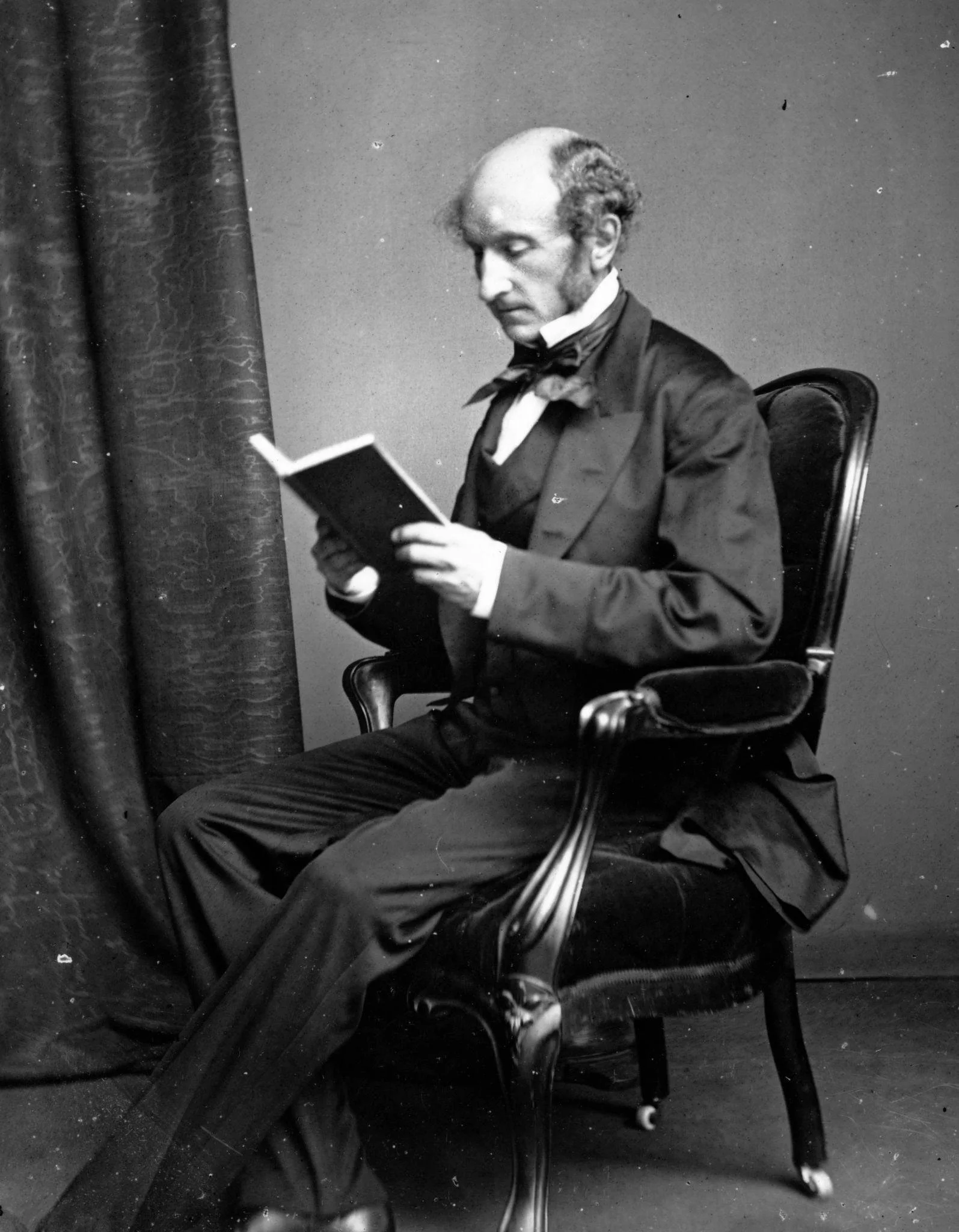
John Stuart Mill
Burnout is often described as the result of doing too much for too long. We may imagine the burned-out person as someone who has simply run out of energy: the employee working late every night, the parent who never gets a break, the student who cannot keep up, or the professional who feels as though there is always one more task waiting.
There is truth to this understanding. The World Health Organization (WHO, 2019) describes burnout as an occupational phenomenon associated with chronic workplace stress that has not been successfully managed. It is characterized by exhaustion, increased mental distance or cynicism toward one's job, and reduced professional efficacy (World Health Organization, 2019).
But burnout can also raise a deeper question:
What happens when our entire way of living becomes organized around the need to accomplish, improve, or keep moving forward?
The philosopher John Stuart Mill encountered a version of this question nearly two centuries ago. His experience offers a surprisingly relevant way of understanding burnout today.
John Stuart Mill and the Crisis of Achievement
John Stuart Mill was one of the most influential philosophers of the nineteenth century. From an extraordinarily young age, he was educated with the expectation that he would become an intellectual and social reformer. His life was structured around purpose, achievement, and the improvement of society.
Yet at the age of twenty, Mill experienced what he called a "mental crisis."
In his Autobiography, Mill described asking himself a deceptively simple question: Suppose everything he was working toward actually happened? Suppose the reforms he hoped for were accomplished and all of his goals were achieved. Would he then be happy?
His answer was no.
Mill described the experience as though the foundation of his life had suddenly collapsed. His goals had previously given meaning to his daily efforts, but once he imagined reaching the end, he discovered that the destination itself no longer seemed capable of giving him happiness (Mill, 1873).
This is important because Mill's crisis was not simply about working too hard. It was about the relationship between achievement and meaning.
He had built his life around a future state in which things would finally be better. But when he imagined that future arriving, he discovered that he had not developed an equally rich relationship with the present.
In some ways, this resembles a question that can arise in burnout:
If I finally finish everything, who will I be?
Or:
What happens when the thing I have been working toward is no longer enough to sustain me?
When the Future Becomes More Important Than the Present
Burnout can develop within a particular relationship to time.
There is always a future version of life that seems preferable to the present:
When I finish this project, I'll be able to relax.
When I get the promotion, I'll feel successful.
When the business becomes stable, I'll have time for myself.
When my children are older, I'll finally be able to slow down.
When I get through this semester, I'll feel like myself again.
When I become more productive, I'll finally feel in control.
There is nothing inherently wrong with having goals. Goals can give our lives direction and purpose. The problem arises when life becomes something we continually postpone until we have achieved enough.
At that point, rest can begin to feel undeserved. Enjoyment can feel like procrastination. Relationships can become interruptions. Hobbies become another opportunity for self-improvement. Even sleep can become something we try to optimize.
The person is no longer simply working toward something.
They are living in anticipation of finally being allowed to live.
Byung-Chul Han and the "Achievement Society"
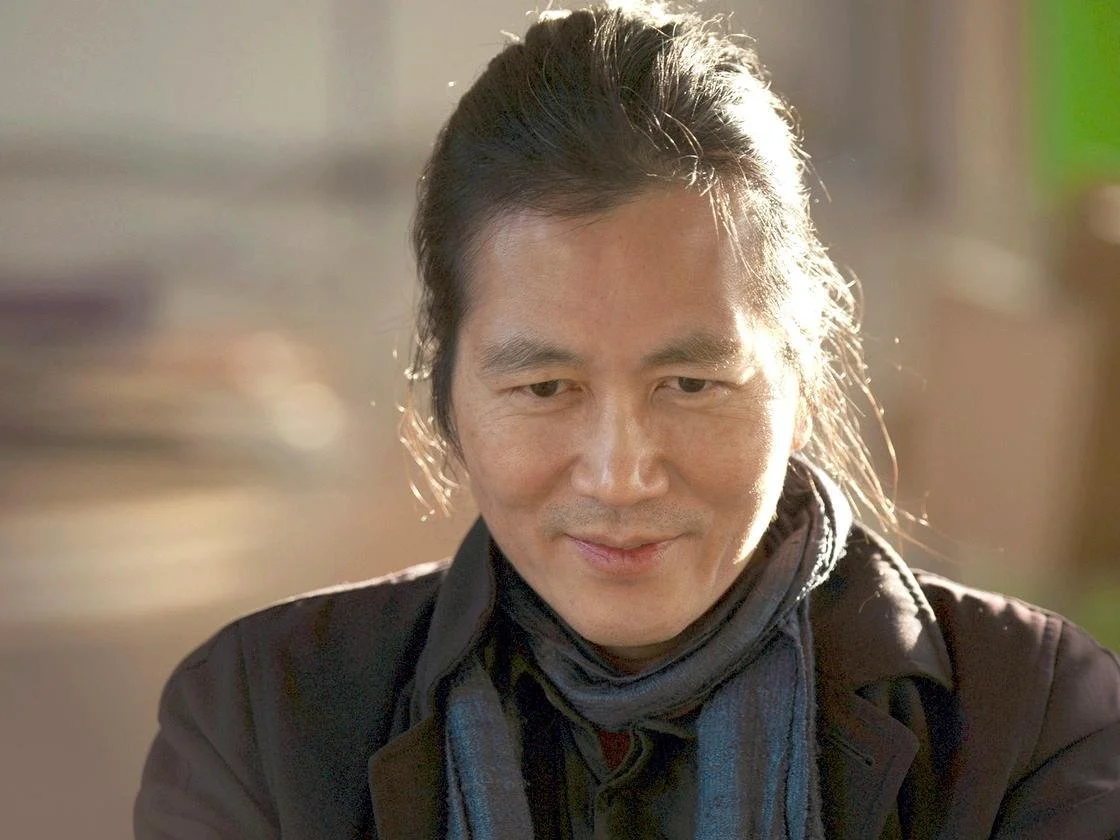
Byung-Chul Han
The contemporary philosopher Byung-Chul Han provides another useful perspective on this problem.
In The Burnout Society, Han (2015) argues that contemporary society has moved away from an older model of discipline based primarily on external commands—"you must" and "you cannot"—toward what he calls an achievement society.
In an achievement society, the message is different:
You can.
You can work harder.
You can become more productive.
You can optimize yourself.
You can build a better career.
You can exercise more.
You can start a business.
You can become your best self.
On the surface, this sounds liberating. There may be fewer external authorities telling us what we must do.
But Han argues that something paradoxical happens: we begin to place the pressure on ourselves. We become responsible not only for our work, but for continually improving ourselves.
The boss does not necessarily have to demand more from us. We may demand it ourselves.
Han (2015) describes this as a form of self-exploitation. The same person becomes both the worker and the taskmaster. Contemporary achievement culture can make freedom and constraint difficult to distinguish because the pressure to perform can feel voluntary (Han, 2015).
This helps explain why burnout can be difficult to recognize.
Someone experiencing burnout may not feel as though anyone is forcing them to do too much. They may even be choosing it.
They may genuinely enjoy their work.
They may have a great career.
They may be pursuing something meaningful.
And yet they may feel unable to stop.
The Difference Between "I Have to" and "I Should"
One of the more subtle forms of burnout occurs when external pressure becomes internal pressure.
"I have to" gradually becomes:
"I should."
Then:
"I could be doing more."
And eventually:
"I should always be doing more."
This can create an exhausting psychological environment in which there is no clear point at which a person has done enough.
There is always another book to read, email to answer, workout to complete, skill to develop, business opportunity to pursue, or aspect of oneself to improve.
Rest itself can become a performance.
Instead of resting because the body needs rest, we begin thinking about how to optimize our recovery so that we can return to productivity more efficiently.
The problem is not ambition.
The problem is when ambition becomes the only acceptable relationship to life.
Burnout and the Loss of Desire
Burnout is sometimes experienced not only as exhaustion but as a loss of desire.
A person may say:
"I don't care anymore."
"I used to love this."
"I know this is supposed to matter to me, but it doesn't."
"I have everything I thought I wanted, and I still feel empty."
This can be frightening, particularly for high-achieving people. They may interpret their loss of motivation as evidence that something is wrong with them.
Sometimes, however, the loss of motivation is information.
It may be the mind and body signaling that the way a person has been living is no longer sustainable.
Mill's experience is useful here because his crisis ultimately forced him to reconsider what he thought a meaningful life required. He came to believe that happiness could not be pursued as a direct achievement. Instead, happiness emerged more naturally when a person became absorbed in relationships, interests, ideals, and activities that were meaningful in themselves (Mill, 1873).
In other words, a meaningful life could not simply be another item on the achievement list.
Burnout May Require More Than Better Time Management
When someone is burned out, it is tempting to respond with productivity strategies:
Make a schedule.
Set boundaries.
Take a vacation.
Exercise.
Get better sleep.
Learn to say no.
These things can be helpful. But they do not always address the deeper problem.
Sometimes the question is not:
"How can I become better at managing everything?"
It is:
"Why do I believe I need to manage everything in the first place?"
A person can become extremely efficient at living a life that is fundamentally exhausting.
They can organize their calendar perfectly while remaining disconnected from what they actually want.
They can become better at productivity while becoming increasingly alienated from themselves.
This is one reason psychotherapy can be useful in working with burnout. Therapy can create space to look beneath the immediate demands and explore the beliefs, fears, relationships, and expectations that keep a person moving long after movement has stopped feeling meaningful.
Reconnecting With a Sense of Self
Recovering from burnout does not necessarily mean abandoning ambition or walking away from one's career.
Sometimes recovery involves learning how to pursue meaningful goals without making achievement the measure of one's worth.
This can involve asking questions such as:
What do I actually value?
What parts of my life feel meaningful even when they produce nothing?
Who am I when I am not accomplishing something?
What am I afraid would happen if I slowed down?
Which responsibilities are genuinely mine, and which ones have I simply absorbed?
What would it mean to have enough?
What parts of myself have been neglected while I have been trying to succeed?
These questions can sometimes lead to practical changes: different boundaries at work, a change in career, more time with family, fewer commitments, or simply a different relationship with productivity.
But they can also lead somewhere deeper.
They can help a person rediscover the difference between living and constantly preparing to live.
A Different Way of Thinking About Rest
Both Mill and Han point toward an important challenge to contemporary ideas about productivity.
We often assume that every moment should be used well.
But perhaps not every moment needs to be productive.
There are experiences that have value precisely because they do not accomplish anything. Conversation. Walking. Reading. Sitting outside. Playing with a child. Listening to music. Being with another person without an agenda.
These experiences can be difficult to justify within an achievement-oriented mindset because they do not necessarily produce measurable results.
But that does not make them meaningless.
In fact, they may be part of what makes a life feel like a life rather than a sequence of completed tasks.
When Burnout Is Asking a Deeper Question
Burnout is not always a sign that someone needs to become better at coping.
Sometimes it is a sign that something about the way they are living needs to be reconsidered.
That does not mean every experience of exhaustion requires a dramatic career change. Nor does it mean that burnout is purely philosophical. Chronic workplace stress, difficult working conditions, inadequate boundaries, financial pressures, caregiving responsibilities, and many other concrete circumstances can contribute to burnout.
The WHO (2019) specifically conceptualizes burnout in relation to chronic workplace stress, rather than as a general term for every form of emotional exhaustion. This distinction is important because experiences that resemble burnout can also overlap with anxiety, depression, sleep difficulties, or other forms of psychological distress.
But psychological recovery can involve more than removing stress.
It can involve understanding the relationship a person has developed with achievement itself.
Mill's crisis began when he discovered that reaching the end of his ambitions did not promise the happiness he had imagined. Han's analysis suggests that contemporary people may be trapped in a different version of the same problem: endlessly pursuing the next achievement because stopping can feel almost impossible.
Perhaps the deeper task is not to find the perfect way to keep going.
Perhaps it is to ask where we are going, why we believe we have to get there, and whether the life we are building is one we actually want to inhabit.
Finding a More Sustainable Way Forward
At Sense of Self Psychotherapy, we understand that burnout can involve more than feeling tired or overwhelmed. It can affect a person's relationship with work, achievement, relationships, identity, and even their sense of what makes life meaningful.
Therapy can provide a space to slow down and examine what may be underneath exhaustion—whether that involves anxiety, perfectionism, difficult expectations, career dissatisfaction, relationship dynamics, or a growing sense of disconnection from oneself.
Rather than simply helping you become more productive, psychotherapy can help you develop a clearer understanding of what you want your life to be organized around.
If you are experiencing burnout and wondering whether the way you are living is sustainable, we invite you to schedule a free consultation.with Sense of Self Psychotherapy in Seattle.
Written by Sense of Self Psychotherapy staff.
References
Han, B.-C. (2015). The burnout society (E. Butler, Trans.). Stanford University Press.
Mill, J. S. (1873). Autobiography. Longmans, Green, Reader, and Dyer.
World Health Organization. (2019, May 28). Burn-out an "occupational phenomenon": International Classification of Diseases (ICD-11). https://www.who.int/news/item/28-05-2019-burn-out-an-occupational-phenomenon-international-classification-of-diseases